
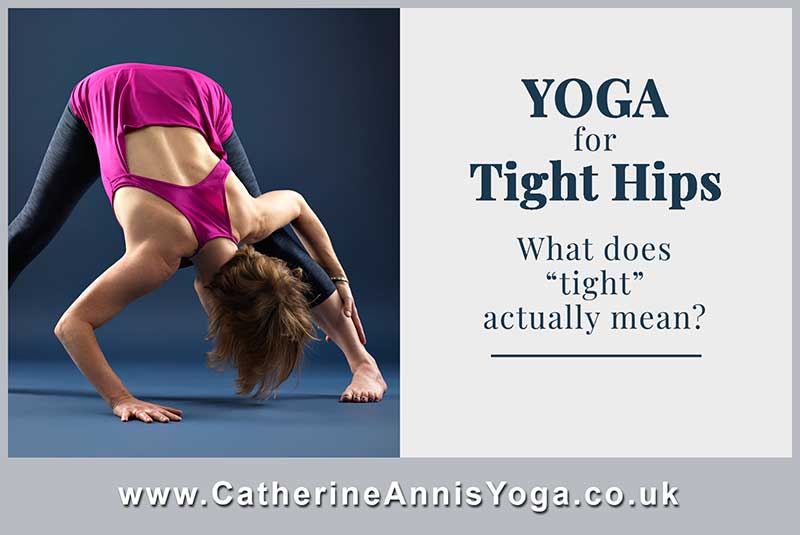
Yoga for Tight Hips: What Does “Tight” Actually Mean?
If you've ever struggled to sit comfortably cross-legged, found Pigeon Pose challenging, or felt restricted when trying to bring your knees towards the floor, you may have described your hips as “tight.”
.
It's a very common phrase in yoga. But what does tight actually mean?
• Does it mean your muscles are too short?
• Does it mean you need to stretch more?
• Is a lack of flexibility the problem?
.
Not necessarily.
.
The sensation of tightness can have many different causes, and understanding this can completely change the way you approach yoga for tight hips.
Sometimes the limitation comes from muscle length. Sometimes it relates to joint mobility, strength, control, anatomy, previous activity or simply how your nervous system responds to a particular movement.
Rather than thinking, “My hips are tight, so I need to stretch harder,” it can be more helpful to ask:
“What is limiting my movement, and what does my body need?”
What Does “Tight Hips” Actually Mean?
“Tight hips” isn't a specific medical diagnosis. It's a description people use for a sensation.
.
You might feel:
• Restricted
• Stiff
• Tense
• Uncomfortable
• Limited in a particular position
• Unable to move as far as you'd like
• A strong stretching sensation
.
These experiences can occur for different reasons.
Two people might both say they have tight hips but have completely different movement limitations. One person might have limited hip rotation. Another might have plenty of available movement but feel uncomfortable at the end of their range.
Someone else might have strong muscles that aren't accustomed to a particular position.
This is why there isn't one universal solution for “tight hips.”
Your Hip Is A Joint, Not Just A Muscle
When we talk about hip flexibility, it's easy to focus entirely on muscles. But the hip is a ball-and-socket joint. The head of the femur sits within the socket of the pelvis, allowing the leg to move in multiple directions.
Your hip can flex, extend, abduct, adduct and rotate.
The amount of movement available depends partly on the muscles and other soft tissues around the joint, but also on the shape and orientation of the bones. This is particularly important in yoga.
Not everyone's hip joints are shaped exactly the same. That means two people can practise the same pose and have different ranges of movement.
Yoga for Tight Hips: Learn how to listen to your body instead of fighting it
Your Anatomy Influences Your Yoga Practice
Imagine two people sitting in a wide-legged seated position. One person may be able to bring their chest easily towards the floor. Another may feel significant restriction much earlier.
It's tempting to assume that the second person simply needs to stretch more. But their skeletal anatomy may be contributing to the difference.
The shape of the hip socket, the orientation of the femur and the proportions of the pelvis and legs can all influence available movement.
This doesn't mean you shouldn't work on mobility.
It means you shouldn't assume that every limitation can be changed through stretching.
Flexibility Isn't The Same As Mobility
This distinction is important.
Flexibility generally refers to the ability of muscles and surrounding tissues to lengthen.
Mobility is broader. It involves the ability to actively move a joint through a range of motion with control.
.
You might have plenty of passive flexibility but limited active control. Or you might have relatively limited flexibility but excellent strength and control within your available range.
For yoga, both can be useful.
But simply chasing flexibility isn't necessarily the best goal.
Why Stretching Doesn't Always Solve Tight Hips
If your hips feel tight, your first instinct might be to stretch harder. Sometimes that feels good. But more stretching isn't always the answer.
.
• Your nervous system may be limiting your movement because the position feels unfamiliar or challenging.
• Your muscles may be working to stabilise the joint.
• You may not have enough strength to control a particular range.
• Your joint anatomy may limit the available movement.
• Or you may simply be experiencing normal resistance at the end of your range.
.
Trying to force your body beyond that point isn't necessarily productive.

The Nervous System Plays A Role
Your brain and nervous system are constantly assessing movement. They receive information about joint position, muscle length, pressure and many other sensations. When you move into an unfamiliar range, your nervous system may respond by increasing muscular activity.
You may experience this as resistance or tightness. With gradual, controlled exposure to movement, that response may change.
This is one reason why a movement can sometimes feel easier after several gentle repetitions. Your body has had an opportunity to become familiar with the movement.
Strength Can Improve Your Sense Of Mobility
This might seem surprising.
If your hips feel tight, you may assume you need more flexibility. But strength can also influence how freely you move.
Imagine trying to lift your leg high into the air. Your body needs enough strength to control the movement. Without that control, your nervous system may be less comfortable exploring the range.
This is why active mobility can be valuable.
Instead of simply holding a stretch, explore movements where your muscles actively control the position.
Your Pelvis Matters
Your hips don't work independently of your pelvis. The hip joints are part of the relationship between your legs and pelvis, while your pelvis connects with your lumbar spine.
Movement at one area can influence movement elsewhere.
For example, when you move into a forward fold, movement can occur at both the hips and spine. When you lift a leg, your pelvis may make subtle adjustments.
Understanding this can help you stop thinking about your hips as isolated joints.
Your body works as a system.
Feel agile, open, and light using Yoga For Tight Hips
What About The Lower Back?
Sometimes people interpret lower-back movement as hip mobility.
This can happen during certain yoga poses. For example, if your hips don't move very far during a forward fold, your spine may contribute more to the overall movement.
This doesn't necessarily mean that your spine is doing something wrong. It simply demonstrates how different regions share movement.
Developing awareness of the relationship between your hips, pelvis and spine can make your practice more informed.
Why Sitting Can Make Your Hips Feel Stiff
Modern lifestyles often involve long periods of sitting. When you're seated, your hips remain flexed for extended periods.
If most of your day involves sitting and very little movement, you may simply be less accustomed to exploring other hip positions.
This doesn't mean that sitting has “shortened” your hip muscles permanently. It means that your body has spent a lot of time in one particular position.
.
Movement variety can help.
• Walking
• Standing
• Climbing stairs
• Changing positions
• Gentle hip mobility exercises
• Yoga
.
All provide opportunities to move in different ways.
Yoga Poses For Tight Hips
Yoga can provide a wonderful range of movements for exploring hip mobility. But you don't need to force yourself into the deepest version of every pose.
.
Low Lunge
Low Lunge explores hip extension in the back leg while the front hip is flexed.
Use blocks or reduce the range if needed.
.
Warrior II
Warrior II involves hip abduction and rotation while the legs work to support the body.
It is as much a strength and stability exercise as a mobility exercise.
.
Figure Four
A reclined figure-four variation can provide an accessible way to explore hip rotation.
.
Butterfly Pose
Butterfly explores hip abduction and external rotation.
Allow the knees to rest at a comfortable level rather than forcing them towards the floor.
.
Pigeon variations
Pigeon can place the front hip into a substantial combination of flexion and rotation.
For some people, a supported or reclined version may be more appropriate.

Don't Judge Your Hips By One Yoga Pose
One of the biggest mistakes yoga students can make is using a particular pose as a test of flexibility.
.
For example:
“I can't get my knees to the floor in Butterfly, so my hips must be tight.”
.
Not necessarily.
.
Your anatomy may simply give you a different available range. The shape of your hip joints influences how certain postures look.
Yoga isn't a competition between skeletons.
Props Aren't Cheating
Blocks, bolsters, blankets and straps can make a significant difference.
.
• If your hands don't comfortably reach the floor, use blocks.
• If sitting upright is difficult, sit on a folded blanket
• If a hip-opening pose feels too intense, add support
.
Props allow you to adjust the demands of a position.
They can help you explore movement without forcing your body into a range it isn't ready for.
The Difference Between Sensation And Pain
A stretch can feel intense without being harmful.
.
You might notice:
• Mild pulling
• Muscular effort
• A feeling of resistance
• Gentle tension
• A sense of unfamiliarity
.
But sharp, severe or worsening pain is different. Pain isn't something you need to push through to become more flexible.
If a particular hip position consistently causes pain, reduce the range or choose another variation. If you have persistent or significant symptoms, seek appropriate professional advice.
Your Hips Don't Need To Be Maximally Flexible
This is perhaps the most important message.
You don't need extremely flexible hips to benefit from yoga. Your body needs enough mobility for the activities you want to do.
If you can comfortably walk, sit, squat, climb stairs and perform the movements you enjoy, you don't necessarily need to increase your range simply because someone else can move further.
.
More movement isn't automatically better movement.
The goal is useful, comfortable and controllable movement.
Mobility Needs Stability
Imagine that you suddenly gained a huge amount of hip mobility overnight. Would that automatically make you better at yoga?
Probably not.
.
You would also need the strength and coordination to control your new range.
.
This is why mobility and stability should be developed together. Yoga can provide opportunities for both. Standing poses develop strength. Balances develop control. Transitions challenge coordination. Dynamic movements explore mobility. Supported stretches can provide gentle exposure to different positions.
Move more freely with Yoga For Tight Hips
Active Mobility For The Hips
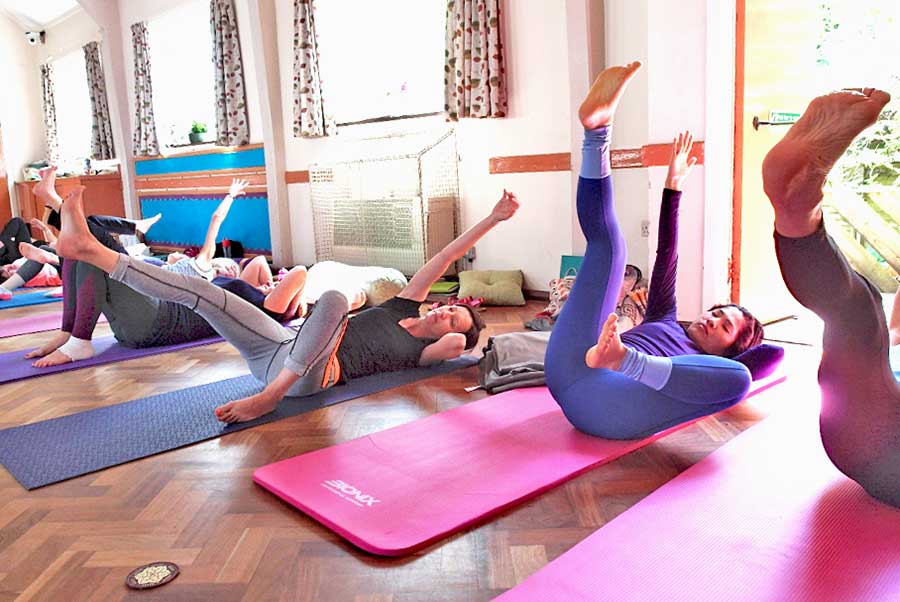
One useful way to explore hip mobility is through controlled movement.
.
For example, you might gently lift one knee towards your chest while standing or lying down.
• Move slowly
• Notice how much range you can actively control
• Then lower the leg with control
.
You aren't trying to force the maximum height. You're exploring what your muscles can manage.
This can provide a very different experience from simply relaxing into a passive stretch.
Breathing Can Influence How Movement Feels
Breathing is another useful tool.
When you hold your breath or brace excessively, movement can feel more difficult.
Try taking slow, comfortable breaths while exploring a hip position. Don't use the breath to force yourself deeper. Instead, allow the breath to remain relaxed while you notice the movement.
If you can't breathe comfortably, consider reducing the intensity.
Why Your Hips May Feel Tighter On Some Days
Just like your back, your hips can feel different from one day to another.
• Sleep
• Stress
• Fatigue
• Activity levels
• Previous exercise
• Long periods of sitting
.
All can influence how movement feels. You might feel more mobile after walking. You might feel stiffer after travelling. You might feel different after a demanding workout.
This doesn't necessarily mean that your anatomy has changed.
Your body's sensitivity and readiness for movement can vary.
How To Approach Yoga For Tight Hips
Rather than starting every practice with the goal of “opening” your hips, try approaching your practice with curiosity.
.
Ask:
How does this movement feel today?
Where do I feel the movement?
Can I breathe comfortably?
Can I control the position?
Could I use a prop?
Would a smaller range feel better?
.
This approach encourages you to work with your body rather than against it.
Restore your natural stride through Yoga For Tight Hips
The Benefits Of Improving Hip Mobility
Developing appropriate hip mobility can offer several benefits.
.
Greater movement freedom
You may find everyday movements such as walking, squatting and getting up from the floor more comfortable.
.
Better movement control
Exploring active mobility can help you become more aware of how your hips move.
.
Improved balance
Your hips contribute significantly to balance, especially during single-leg movements.
.
Greater yoga confidence
Understanding your anatomy can help you stop comparing your posture with other people's.
.
Better strength and stability
Many yoga poses combine hip mobility with muscular control.
.
More comfortable movement
A balanced approach to mobility can help you explore ranges that feel appropriate for your body.
A Simple Approach To A “Tight Hips” Practice
You don't need a long sequence.
.
• Start with gentle movement
• Try a few minutes of walking or easy standing movements
• Explore pelvic tilts
• Move through Cat-Cow
• Add gentle lunges
• Try a supported figure-four
• Explore Warrior II
• Finish with a comfortable seated or lying position
• Move slowly
• Notice how your body responds
.
You may discover that your hips feel different after ten minutes of movement without having forced a single deep stretch.
When Should You Seek Professional Advice?
If you experience persistent hip pain, significant restriction, a sudden change in mobility, or symptoms following an injury, it's sensible to seek individual assessment from an appropriately qualified healthcare professional.
Don't assume that every sensation of “tightness” means you need to stretch more.
And don't use yoga to diagnose the cause of persistent symptoms.
A yoga teacher can help you modify poses and use props, but they shouldn't diagnose a medical condition.
Final Thoughts
So, what does “tight hips” actually mean?
• It can mean many things.
• You might have limited mobility.
• You might lack strength or control in a particular range.
• Your nervous system may be responding to an unfamiliar position.
• Your anatomy may naturally limit a particular movement.
• You may simply feel stiff after sitting or being inactive.
• And sometimes you may genuinely benefit from increasing your mobility.
.
The important thing is not to assume that every restriction needs to be stretched away.
Instead, think about mobility, strength, stability, control and body awareness together.
Your hips don't need to become extremely flexible.
They need to be capable of moving in ways that support your everyday life and the activities you enjoy.
So the next time you find yourself thinking, “My hips are so tight,” pause for a moment.
.
Ask yourself:
• What movement feels limited?
• What sensation am I experiencing?
• Can I move comfortably within a smaller range?
• Can I strengthen and control the range I already have?
• Would a prop help?
.
These questions can transform your approach to hip mobility.
Yoga isn't about forcing your body into a particular shape. It's about developing a better relationship with movement.
And sometimes, the most valuable thing you can do for “tight hips” isn't to stretch harder.
It's to move with more awareness, patience and curiosity.
Your ultimate, no-nonsense guide to Yoga for Tight Hips
Enjoyed this? Let's stay connected.
Follow me on Instagram for practical movement ideas, strength and somatic yoga, and ideas to help you move well, feel strong and stay resilient.