
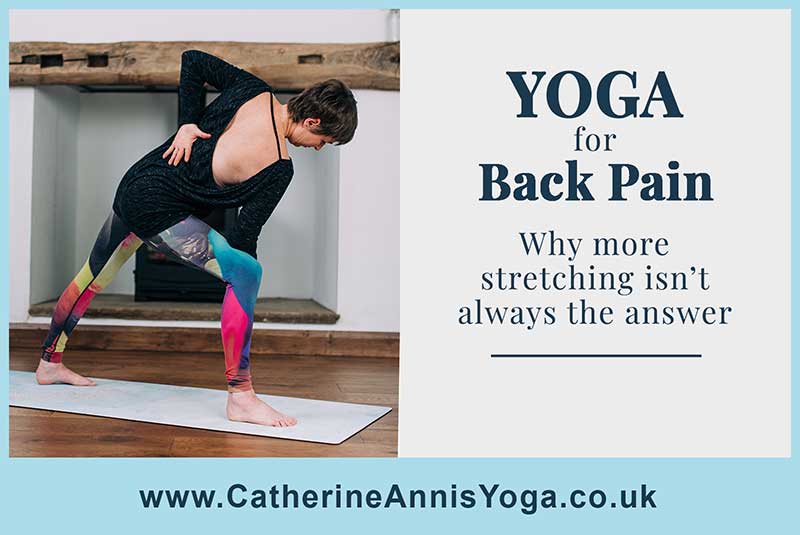
Yoga For Back Pain: Why More Stretching Isn’t Always the Answer
When your back feels stiff, achy or uncomfortable, one of the first things you might think is, “I need to stretch.”
It’s an understandable response. Yoga is often associated with flexibility, stretching and releasing tension, so it seems logical that stretching your back should make it feel better. This is one reason many people become interested in Yoga For Back Pain when discomfort starts affecting everyday life.
However, more stretching isn’t necessarily the answer.
.
Sometimes your back may benefit from gentle movement. At other times, strengthening, improving movement control or simply changing position may be more useful. There are also occasions when pain is a sign that professional assessment is more appropriate than another stretch.
A balanced approach to yoga for back pain therefore involves more than trying to make the spine as flexible as possible. It means understanding movement, strength, mobility, body awareness and your individual response to different exercises.
What Do We Mean by Back Pain?
“Back pain” is a broad term rather than a specific diagnosis.
People experience back discomfort in many different ways. It may feel like stiffness, aching, soreness, burning, sharpness or general discomfort. Some people notice symptoms while sitting, while others experience them when bending, walking, lifting, twisting or getting out of bed.
The causes can vary considerably too. Symptoms may be associated with muscles or joints, but there can also be medical conditions and other contributing factors.
This is why yoga for back pain should never be treated as a single routine that works identically for everybody.
Your experience is individual. A posture that feels comfortable for one person might feel unpleasant for another. Even your own response to a movement can change from one day to the next.
Rather than searching for a universal “best stretch,” it can be more helpful to pay attention to what your body can comfortably do right now.
Does Stretching Help Back Pain?
Stretching can certainly feel good.
Gentle movement may temporarily reduce the sensation of stiffness and help you feel more comfortable. If you have been sitting for a long time, for example, standing up and moving through an easy range may provide welcome relief.
But stretching isn’t a universal solution.
If a particular movement already irritates your back, repeatedly pushing further into that movement may increase discomfort. Similarly, if limited flexibility isn’t actually the main issue, gaining more flexibility might not address what your body needs.
.
A thoughtful approach to yoga for back pain considers whether stretching is helpful rather than automatically assuming that more is better.
The aim doesn’t have to be reaching your toes, creating a deeper forward fold or achieving a dramatic backbend. Comfortable, controlled movement can be valuable without taking a joint to its maximum range.
This brings us to an important distinction: flexibility and mobility aren’t exactly the same thing.
Flexibility Isn’t the Same as Mobility
Flexibility generally describes the ability of muscles and other soft tissues to lengthen. Mobility is broader and involves your ability to move a joint or body region through a range of motion with control.
You don’t necessarily need exceptional flexibility to move well. In fact, having a large range of movement may not be particularly useful if you lack the strength or control to manage that range comfortably.
For this reason, yoga for back pain can include mobility work without making extreme flexibility the objective.
Think about everyday movements such as getting out of a chair, turning to look behind you or reaching for something. These tasks involve coordination and control as well as range of motion.
.
For back health, comfortable movement, strength, coordination and confidence may ultimately be more useful than simply trying to become increasingly flexible.
Your Spine Is Designed to Move
When your back hurts, it’s easy to become worried about moving your spine.
You might begin avoiding bending, twisting or extending because you fear that movement will make the problem worse. Yet the spine is a mobile structure. It bends, extends and rotates as part of normal everyday movement. You use your spine when you walk, reach, turn, sit down, stand up, get dressed and pick things up.
.
The goal of yoga for back pain isn’t necessarily to prevent spinal movement. Instead, it can be to explore appropriate ways of moving that suit your present circumstances.
This might mean using a smaller range than usual. It might mean moving more slowly or using additional support. Over time, the movement that feels appropriate may change.
Yoga can provide a calm environment in which to explore these options without feeling that every posture has to look a particular way.
Movement Doesn’t Have to Mean Stretching
This distinction is important when practising yoga for back pain.
Movement doesn’t automatically mean taking a muscle or joint to the end of its available range. It can be much simpler.
Changing position, walking, moving the pelvis, gently rotating the spine, moving the hips, standing up from a chair and exploring small spinal movements are all forms of movement.
Even breathing comfortably while noticing how the ribs, abdomen and trunk move can encourage awareness of your body.
If intense stretching aggravates your symptoms, smaller movements may feel considerably better.
.
Instead of thinking that a yoga session only “counts” when you experience a strong stretch, consider whether you can move comfortably and confidently. A gentle movement that feels manageable may be far more appropriate than a deep posture that leaves you uncomfortable afterwards.

Strength Matters Too
One of the biggest misconceptions surrounding yoga for back pain is that flexibility should always be the main goal.
Your body needs strength too.
.
The muscles around your trunk, hips and legs contribute to the way you move and manage physical demands. Yoga offers many opportunities to challenge these areas without relying exclusively on stretching.
Standing postures can involve the legs and trunk. Chair Pose can develop lower-body strength. Bridge variations can engage the hips and posterior chain. Appropriate Plank variations can challenge the shoulders, arms and trunk.
None of these exercises needs to be performed at maximum intensity.
.
When using yoga for back pain, the objective can be to gradually develop strength and control at an appropriate level rather than exhausting yourself.
Strengthening can also help broaden your movement options. Instead of simply being able to reach a position, you can work towards feeling controlled and confident while moving into and out of it.
Your Hips and Back Work Together
Your lower back doesn’t operate independently from the rest of your body. Your hips, pelvis, spine and legs work together during many everyday activities.
Imagine bending down to pick something up. Your hips move, your pelvis changes position, your knees may bend, your spine moves and your muscles coordinate the entire action.
If yoga for back pain focuses exclusively on stretching the lumbar spine, it can overlook this whole-body relationship.
.
Instead of always asking, “How can I stretch my lower back?” consider asking, “How can I move my hips, pelvis and spine comfortably together?”
That question opens up more possibilities.
Hip movements, supported squats, standing exercises and controlled transitions can all become part of a broader practice. The emphasis shifts from isolating one uncomfortable area to exploring how your whole body participates in movement.
Why Everyday Movement Habits Matter
Your yoga session represents only one part of your movement day.
If you spend many hours sitting and then practise yoga for an hour, your body has still experienced all those other hours. That doesn’t mean sitting is inherently harmful. It simply highlights the importance of movement variety.
A sensible yoga for back pain practice can therefore extend beyond your yoga mat.
.
Change position periodically. Stand up when convenient. Take short walks. Move your shoulders. Rotate gently. Use the stairs when appropriate. Stretch when it feels good.
Small amounts of movement throughout the day can help provide variety without turning every break into a workout.
.
The goal isn’t to maintain a supposedly perfect posture every minute. Human beings naturally move between positions, and having options can be more realistic than trying to hold one “correct” position all day.
Explore Yoga For Back Pain and discover a balanced approach to mobility, strength and mindful movement
Posture Isn’t About Being Perfectly Straight
Another common belief is that back pain is always caused by “bad posture.” Human bodies are much more complicated.
There isn’t one perfect posture guaranteed to prevent discomfort. Your spine naturally changes position during the day. You might sit slightly rounded at one moment and more upright at another. You may lean to one side while relaxing or shift your weight while standing.
This variability is normal.
.
When exploring yoga for back pain, try not to treat posture as a rigid standard that you must constantly correct.
Instead, consider whether you have different movement options and whether you can change position comfortably.
.
If sitting in one position for a long period feels uncomfortable, changing position may be useful. That doesn’t necessarily mean the original position was inherently “bad”; it may simply mean your body appreciates variety.
Your Nervous System Affects How Pain Feels
Pain isn’t simply a direct measurement of tissue damage.
The nervous system plays an important role in how pain is experienced. Your brain receives information from many sources, and factors including stress, sleep, previous experiences, expectations and emotional state can influence how symptoms feel.
This doesn’t mean pain is imaginary. Pain is real. It means that pain is complex.
.
This broader understanding can influence how you approach yoga for back pain. Yoga’s focus on breathing, attention and mindful movement may help you notice your body’s responses and explore movement more calmly.
However, yoga shouldn’t be presented as a guaranteed treatment.
.
Some people find particular practices useful, while others may need a different form of exercise, professional support or medical assessment. Your response matters more than claims that a certain posture is universally therapeutic.
Why Forcing a Stretch Can Be Counterproductive
When something feels uncomfortable, it’s natural to want to do something about it immediately.
Stretching can create the feeling that you’re actively tackling the problem. But more intensity doesn’t necessarily produce a better result. If you repeatedly push into a movement that aggravates your symptoms, you may simply increase your discomfort.
.
Effective yoga for back pain doesn’t require you to force your body into the deepest possible position. Try exploring a smaller, more comfortable range instead.
Rather than asking, “How far can I go?” ask, “How does this movement feel today?” That change in mindset can transform your practice. It shifts the emphasis from achievement to observation.
On another day, you might comfortably move further. Today, a smaller movement might be the better option. Neither version makes your practice more or less successful.
Yoga Props Can Help You Adapt
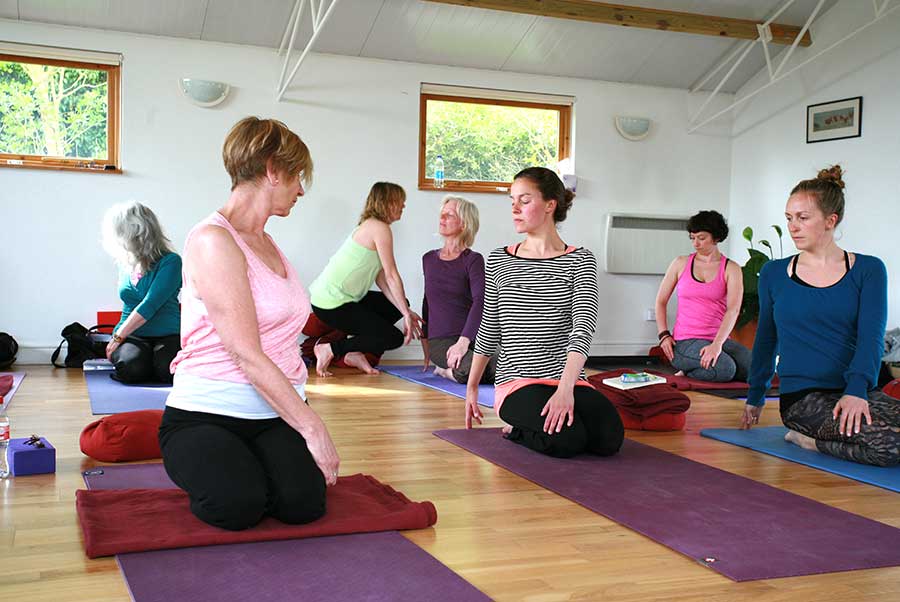
Blocks, bolsters, straps, blankets and chairs aren’t signs that you’re doing yoga incorrectly. They’re tools. When practising yoga for back pain, props can make movements easier to adapt to your current needs.
For example, placing blocks underneath your hands during a forward fold can reduce the distance you need to reach. A bolster may provide support during a restorative posture. A chair can add stability during standing movements, while a folded blanket can make certain positions more comfortable.
Using support allows you to modify the shape rather than forcing yourself to reproduce someone else’s version.
That flexibility is especially valuable when symptoms fluctuate. A posture you practise without support one week might feel better with a prop the next. Adaptation isn’t failure; it’s part of responsive movement.
What Might a Back-Friendly Yoga Practice Look Like?
There isn’t one perfect yoga for back pain sequence that everyone should follow.
A gentle practice might begin with comfortable breathing and awareness before progressing into easy pelvic movements. You could explore Cat-Cow within a comfortable range, followed by hip mobility exercises and supported standing postures.
Gentle spinal rotations may also be appropriate. Bridge variations can introduce strengthening when comfortable, while controlled transitions between postures provide another opportunity to practise coordination.
Finally, relaxation or rest can give you time to notice how your body feels after moving.
.
The important principle is quality over quantity.
.
A yoga for back pain routine doesn’t need dozens of stretches. Five or six thoughtfully selected movements may be more useful than repeatedly forcing yourself through a long sequence.
Pay attention to how you feel during the movement, immediately afterwards and later in the day.
What If Bending Forward Feels Uncomfortable?
Forward bending is a normal movement of the spine, but that doesn’t mean you have to force it when it currently aggravates your symptoms.
During yoga for back pain, forward folds can be modified in numerous ways.
You might bend your knees, reduce your range, place your hands on blocks or choose a different movement. You might also explore bending from a higher position instead of trying to reach the floor.
Modification doesn’t necessarily mean avoiding forward movement forever. It means adapting the movement to your current circumstances.
As your comfort and tolerance change, your practice can evolve too. The version of a posture that suits you today doesn’t have to be the version you use permanently.
Discover Yoga For Back Pain and learn how strength, mobility and mindful movement can work together
What If Backbends Feel Uncomfortable?
The same principle applies to spinal extension. You don’t need to achieve a dramatic backbend to benefit from yoga for back pain.
If Cobra, Upward-Facing Dog or another extension-based posture feels uncomfortable, reduce the range or select an alternative. A small, controlled movement can still allow you to explore spinal extension.
Your spine doesn’t require maximum extension in order for movement to be worthwhile. Focus instead on a range you can comfortably control. Notice whether you can breathe naturally and whether you feel stable.
.
Yoga isn’t a performance, and deeper isn’t automatically better. The most visually impressive version of a posture may have little relevance to what your body needs.
Listen to More Than Your Flexibility
One valuable skill that yoga for back pain can encourage is body awareness. Instead of asking only whether you’re flexible enough, notice other information.
• How are you breathing?
• Are you gripping or holding unnecessary tension?
• Do you feel stable?
• Can you control the movement?
• Does the sensation change when you reduce the range?
• Does the posture feel different after warming up? Would additional support help?
.
These observations give you more information than simply measuring how far you can stretch.
.
A useful yoga for back pain practice can become a process of experimentation. You can adjust your position, speed, range and level of support and then notice what changes.
This encourages a more responsive relationship with movement rather than following rules about what your body “should” be able to do.
Slow and Controlled Transitions Matter
Yoga postures often receive most of the attention, but the movements between them matter too. Moving from standing to the floor, rising from a lunge or rolling from your back onto your side all require coordination.
For some people practising yoga for back pain, transitions may actually be more challenging than holding a posture. Try slowing them down.
Use your hands for support when useful. Bend your knees if that makes a transition easier. Move through an available range rather than rushing to reach the next shape.
These moments can also provide opportunities to build strength and confidence.
A yoga practice isn’t simply a collection of poses. It’s a continuous sequence of movements, pauses, adjustments and transitions, all of which can be adapted.
Breathing Can Support Your Practice
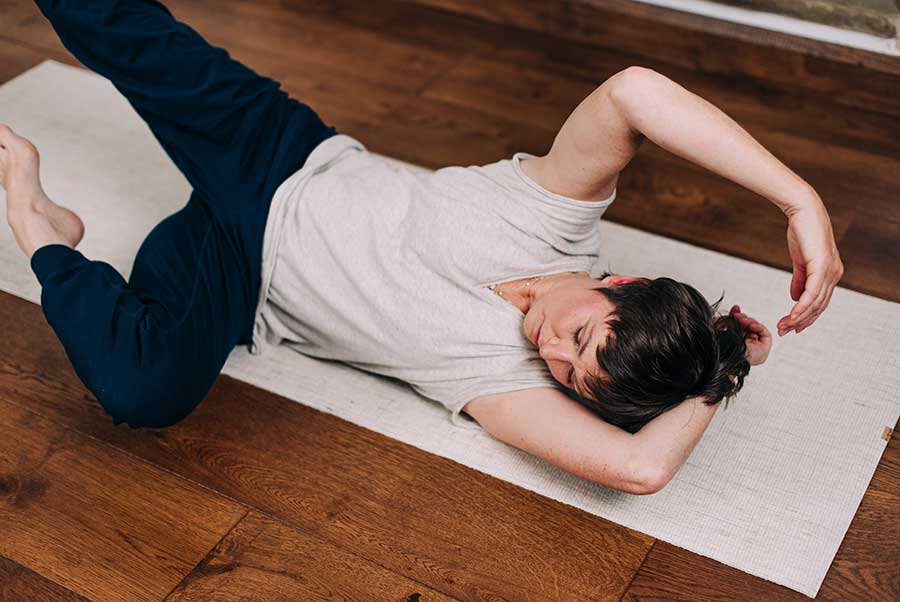
Breathing is another important part of yoga for back pain, although it doesn’t need to become complicated. You don’t have to force an unusually deep breath or follow a demanding breathing technique. Instead, notice whether you can breathe comfortably while moving.
Sometimes people unconsciously hold their breath when concentrating, stretching intensely or trying to stabilise themselves. Allowing your breath to remain natural can help you recognise when you’re working harder than intended.
Breathing can also give your practice a slower rhythm.
This doesn’t mean a particular breathing exercise will cure back pain. Rather, breathing provides another source of information about how you’re responding to a posture or movement.
When Should You Stop and Seek Advice?
Not every type of back discomfort is suitable for self-management through yoga for back pain.
If you experience severe or worsening pain, significant weakness, numbness, changes in sensation, problems with bladder or bowel control, unexplained symptoms or other concerning changes, seek prompt medical attention.
Individual professional guidance is also sensible if you have a diagnosed spinal condition or you’re unsure whether a particular type of exercise is appropriate.
.
A qualified yoga teacher can help you modify postures and find alternative movements, but a yoga teacher cannot diagnose the cause of back pain.
Knowing when to seek additional help is an important part of looking after yourself.
Yoga can be one movement option, but it shouldn’t replace appropriate medical care when assessment is needed.
Yoga Isn’t About “Fixing” Your Back
Perhaps one of the most useful shifts in yoga for back pain is moving away from the idea that your back is something broken that yoga must “fix.”
.
Your spine is part of a living, adaptable body.
• Symptoms can change.
• Your movement capacity can change.
• Strength can develop.
• Confidence can increase.
• Your tolerance for particular activities may also change over time.
• Your yoga practice can change alongside you.
.
This perspective may help movement feel less like a test you must pass and more like an opportunity to understand your body.
Rather than trying to correct every sensation or achieve an ideal shape, yoga for back pain can involve exploring what feels manageable today and adapting when necessary.
Some days you may want more movement. On others, a short walk or rest might feel more appropriate.
A More Balanced Approach to Yoga For Back Pain
A balanced practice considers much more than stretching.
Yoga for back pain may include mobility, allowing you to explore comfortable ranges of motion. It can include strength, helping your body manage physical demands. Coordination allows different areas of the body to work together, while balance challenges your ability to control your position.
Body awareness helps you notice how movements feel. Comfortable breathing can encourage a calmer, more attentive practice. Recovery gives your body time to rest and adapt.
These elements can work together.
When yoga for back pain is approached this way, the goal becomes broader than lengthening supposedly tight muscles. You’re developing movement options rather than chasing maximum flexibility.
That means your practice doesn’t have to look the same as somebody else’s, and it doesn’t even need to look the same from one day to another.
Final Thoughts
If you’ve experienced back pain, it’s completely understandable to want to stretch the discomfort away.
But more stretching isn’t always the answer.
.
A thoughtful approach to Yoga For Back Pain recognises that your back may benefit from a combination of comfortable movement, mobility, strength, coordination, awareness and rest. What is most appropriate depends on your body, your circumstances and the nature of your symptoms.
.
Yoga can provide a valuable environment for exploring movement with curiosity rather than fear.
Instead of asking, “How much can I stretch?” try asking, “How can I move in a way that feels appropriate for me today?”
That question creates many possibilities.
.
Your Yoga For Back Pain practice might involve gentle movement. You might work on strength. You might use a block, bolster or chair. You might reduce the range of a familiar posture or slow down your transitions.
You might take a walk instead.
Or you may decide that today is a day for rest.
There is no prize for stretching the furthest, and a healthy yoga practice isn’t about forcing your body into a particular shape.
.
The most useful Yoga For Back Pain approach is one that respects your individual needs and allows you to respond to what your body is communicating.
Sometimes the best thing you can do for your back isn’t to stretch it further.
It’s to listen to it.
Start your Yoga For Back Pain journey with movements designed to encourage comfort, control and body awareness
Enjoyed this? Let's stay connected.
Follow me on Instagram for practical movement ideas, strength and somatic yoga, and ideas to help you move well, feel strong and stay resilient.